The Decisions That Defined Building Performance This Year
Looking Back: What This Year Taught Us About Building Performance
As the year draws to a close, it’s worth stepping back from individual projects and asking a broader question:
What actually moved the dial this year when it came to building performance?
Across very different sectors - residential, commercial offices, retrofit, data centres and international delivery - a few consistent lessons kept surfacing. Not trends. Not buzzwords. Practical realities that shaped outcomes on live projects.
Here are the ones that stood out.
1. Performance is decided earlier than most people think
High-density housing leaves little room for error. Choices around plant strategy, heat distribution, overheating risk and spatial coordination are often locked in long before construction begins.
As Barry Dunne explains:
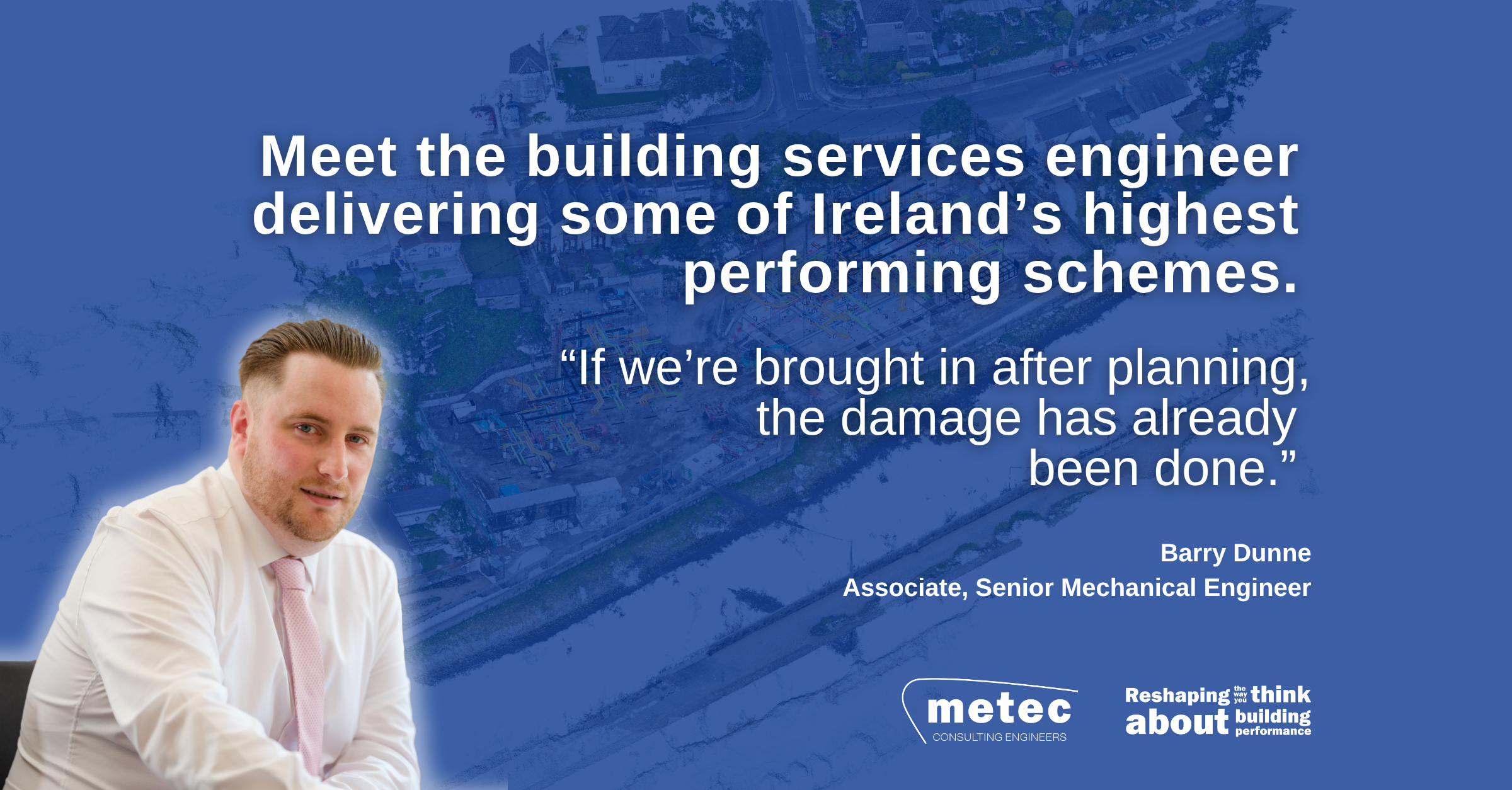
“The biggest mistakes we see on residential schemes happen before planning. Once the wrong strategy is chosen early on, you’re trying to engineer your way out of it later.” - Barry Dunne, Senior Engineer
Early M&E involvement wasn’t about adding complexity. It was about removing guesswork - allowing teams to test assumptions while there was still flexibility in the design.
2. Reuse only works if you can prove how a building will behave
“The greenest building is often the one that already exists” only holds true if performance can be demonstrated, not assumed.
As Gary Quinn put it:
“The real question for clients isn’t ‘Can we reuse it?’ It’s ‘Can we guarantee how it will perform once it’s full of people, systems and real-world schedules?’” - Gary Quinn, Executive Director, Senior Mechanical Engineer
Operational energy modelling, detailed systems analysis and BIM-led interrogation helped teams distinguish between what genuinely needed replacing and what could be retained without compromising comfort, energy use or long-term value.
3. Inherited designs aren’t the risk - unchecked assumptions are
Across complex projects, particularly in data centres, contractors are increasingly handed Stage 3 or 4 designs carrying hidden assumptions - around BMS scope, access, coordination, fire strategy or constructability - that only surface once programme and cost pressure are already in play.
As Daniel Lynch observed:
“On paper, these designs often look finished. But when you interrogate them properly, you start to see gaps that can create real risk on site if they’re not addressed early.” - Daniel Lynch, Executive Director, Senior Mechanical Engineer
Design review wasn’t about redoing work. It was about making risk visible while there was still time to act - before those assumptions became contractual, financial or operational problems.
4. Models only matter if they reflect reality
Across office and complex commercial projects, the focus shifted from geometry to intelligence - using BIM to embed real engineering data early, so performance issues surfaced before procurement or construction.
As Richard Denver explained:
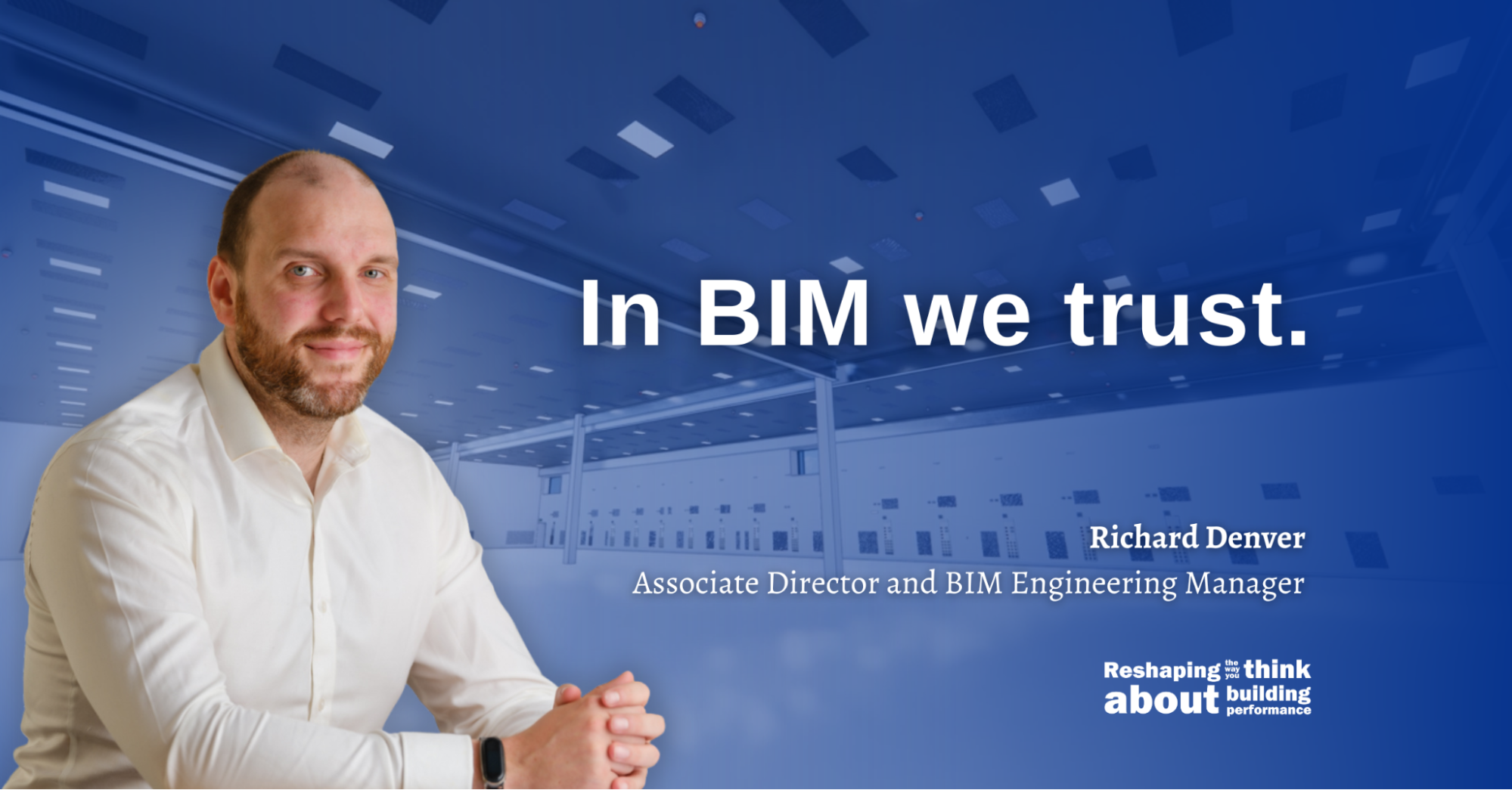
“If your model doesn’t reflect how the building will actually perform, then you’re not designing - you’re guessing.” - Richard Denver, Associate Director and BIM Engineering Manager
By embedding operational assumptions, system data and live inputs into the model, teams were able to validate decisions earlier, support operational energy modelling, and create a digital foundation that carried through into handover and facilities management.
In that context, BIM became less about coordination and more about certainty.
5. Certifications follow performance - not the other way around
As Scott Caldwell noted:
“LEED doesn’t reward good intentions. It rewards evidence. If the performance isn’t real, the credits don’t follow.” - Scott Caldwell, Sustainability Lead
Rather than treating certification as a box-ticking exercise, the project used it as a framework to validate good engineering - from embodied carbon decisions to futureproofing systems without placing unnecessary burdens on tenants.
6. Consistency matters more than location
What varied was context - and the ability to adapt engineering responses without losing performance intent.
As Bernard Denver explained:
“Good engineering should travel. The fundamentals don’t change, even if the paperwork does.” - Bernard Denver, Managing Director
Projects that delivered consistency across borders focused less on replicating specifications and more on applying first principles - understanding climate deltas, life-safety requirements, operational expectations and cost stage-gates early.
Consistency wasn’t about uniformity. It was about predictability.
Closing
Looking back, it’s clear that the most successful projects weren’t defined by size, sector or geography.
They were defined by clarity, collaboration and a willingness to ask harder questions early.
As the year closes, those principles feel less like trends and more like the baseline for how good buildings should be designed.