The engineers you appoint today are the ones you’ll need in 2031
Ireland is short of engineers. Engineers Ireland’s 2025 Barometer found that 84% of employers see the shortage of experienced engineers as a major recruitment challenge.
For a client, that’s a risk you can see coming and should note. A project depends on people who can be difficult to replace, harder still to recruit and vulnerable to being lost to competitors. So, when appointing a consultant, it is worth looking further than the team available today. Who will still be there in five years? Do they have a culture of retention? And who is being prepared to take on greater responsibility as senior engineers move on?
Metec’s response for project success has two parts. It retains and develops the engineers it trains in Bray, while its team in Manila gives the business access to a wider pool of qualified engineers without compromising its standards. But, it all starts with that culture of how people are supported, trained and given responsibility from the outset.
Development of practical and technical judgement
Thomas O’Shea, a mechanical engineer who worked part-time at Metec during college before joining full-time, recently reviewed hot water calculations on a restaurant project. The original scheme design had allowed for too little hot water production.
He worked through the options with two senior engineers, and together they agreed a minimum storage volume the team could sign off. The result was a bigger tank than the earlier consultant had allowed for.
“As a junior engineer, it can be hard to hold firm on something,” Thomas says. “But when you’ve worked it through with senior engineers, you have the confidence to go back with the answer.”
Junior engineers are given problems to work through, with experienced colleagues available to review their thinking and help them reach a position they can justify.
Holly Knight, who joined straight from university last year, has built up knowledge on sprinkler design, an area where mistakes are costly and questions come up often. Within her first year, senior colleagues were asking her opinion on it.
“I’ve done a lot of work trying to learn it, and now people come to me with questions,” she says. “I might not have every answer, but I can usually point them in the right direction.”
An open office, by design
The physical layout of Metec’s Bray office was deliberately designed to encourage communication between engineers at different stages of their careers. The directors chose an open-plan layout because they believe people learn by being part of the conversations taking place around them.
Cyril Creaven, Executive Director and Senior Electrical Engineer, explains it in terms of what happens when a junior engineer can hear senior people working through problems.
“The junior engineers by osmosis are learning, because they’re there listening to what’s going on and the questions are being asked and the suggestions are being made,” he says.
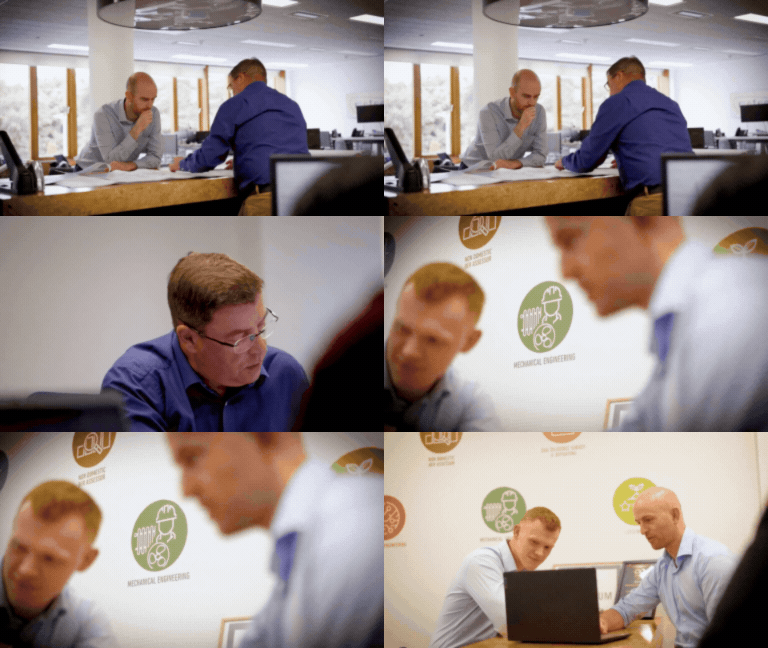
The directors had experienced the drawbacks of closed offices and separated teams elsewhere. When people work in silos, knowledge can become confined to individual departments rather than shared across sustainability, mechanical and electrical disciplines.
An open office makes it easier for engineers to exchange ideas and resolve questions as they arise.
Thomas sees the benefit in everyday interactions: “It’s a lot easier to ask them a question, rather than trying to set up a Teams meeting or send a message,” he says. “You feel like you’re bothering people more. Whereas if I can just turn round and ask.”
Holly describes the same advantage. “It’s handy just to turn to my left or to my right and ask a quick question,” she says. “Sometimes that starts a bigger conversation, and that’s where you find the best solution.”
For clients: questions can be raised earlier and discussed directly with the people who have the experience to answer them. That can make a world of difference when decisions need to be made quickly.
Ideas are expected and heard
Retention also depends on whether people feel their input counts. Cyril describes how this has led engineers to take the initiative, researching potential improvements and assessing their costs and benefits: “We’ve had a few instances where engineers have come out and, on their own time, come up with ideas and done an in-depth study into it, the cost, the benefits,” he says. “If you don’t encourage that, you’re missing an opportunity.”
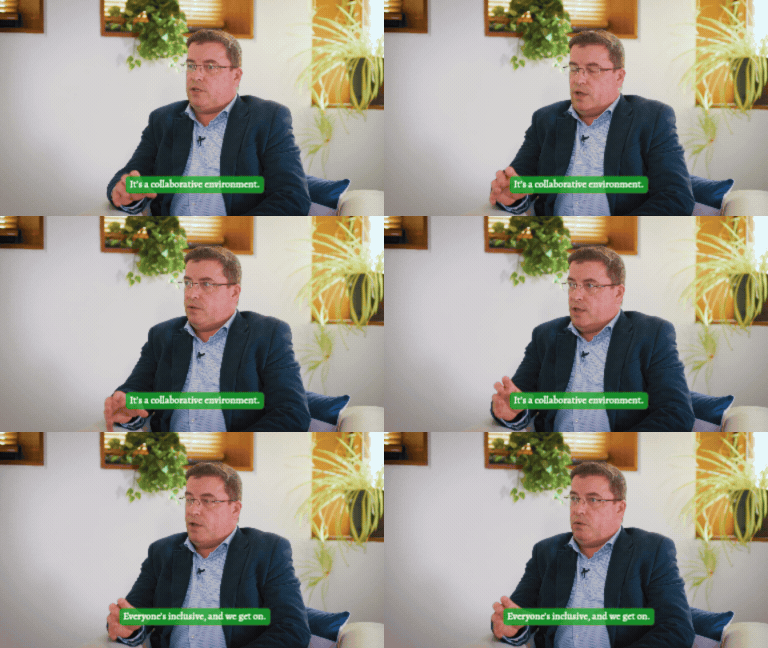
Cyril is also clear that experience doesn’t mean being right by default. “If I’m not open to suggestions and listening to everyone’s views, just because I’ve been doing it for the last 35 years, then I’m not doing my job right. ”
A team that questions its own assumptions has more opportunity to identify issues and improve a design before it reaches site.
Holly has seen this approach in action.“It’s the ability to say, ‘OK, maybe let’s do both,’” she says. “If we’re getting the same answer two ways, we know one calculation is right. Or if one’s a bit better, let’s take out that design margin so we’re not getting these massive plant rooms.” Testing alternative calculations can help avoid unnecessary design margins and make more efficient use of space.
Knowledge stays in the firm
Knowledge needs to be retained as well as people. Investing in shared systems allows design improvements to be carried from one project to the next.
Richard Denver, Associate Director and BIM Engineering Manager, has spent eight years building the Metec’s custom Revit families and templates. He describes them as building blocks: each product gets a family with its design data built in, and the families get better with every project.
“Each product, you take an iteration, an update, a template update, and the families make their own,” he explains. “If you build them right, it gets easier every time.”
He keeps a running list of what needs fixing. “I have a notepad. I hide items and need to fix this, add this in, this would be good to add in,” he says.
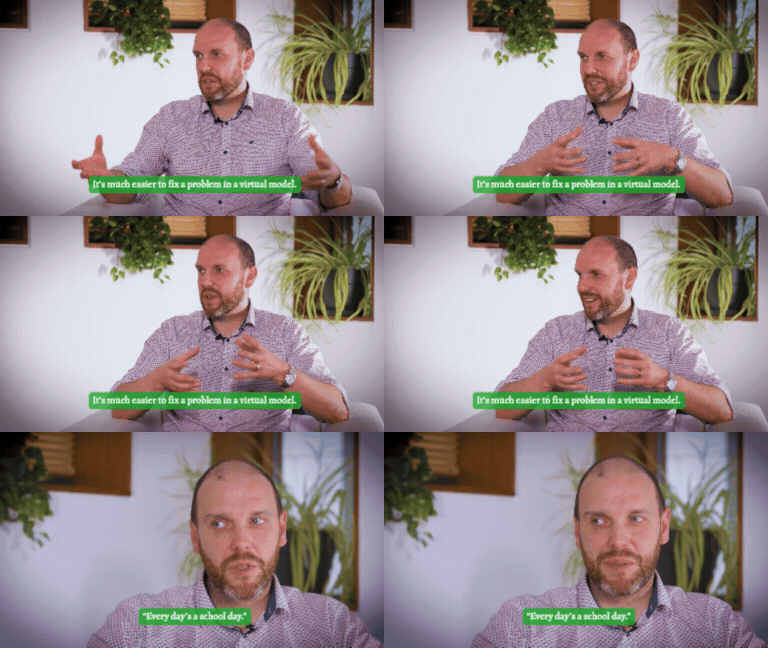
For a long-term project, this creates a working method that does not rely on one person’s memory. Each engineer contributes to a shared resource that stays with the business, allowing the knowledge and improvements gained on one project to inform the next.
Cyril links this to repeat work. “I love it when I get the phone call to say, we’re getting the band back together. We’re onto the next one. So a big motivator for me is getting repeat work.” Repeat clients are the strongest evidence that a team is stable - a client who asks for the same people again is telling you the team is worth keeping together.
Staying with the firm
Career development plays an important role in retaining engineers, with internal promotion giving people the opportunity to progress into senior positions.
Cyril describes the firm as one that ‘promotes from within and gives people room to grow into senior roles’. He personally started as a trade apprentice, and he’s now a director. Richard joined as a junior engineer and now leads the BIM function.
Holly sums up what keeps engineers interested. “It’s the willingness to keep learning,” she says. That attitude is important in a profession where standards, technology and project requirements continue to evolve. Developing engineers gives them the support to keep pace with those changes throughout their careers.
Who will still be on your project in five years?
A client appointing a consultant is betting that the team will still be there, with the same judgement, when problems come up. That’s a fair thing to ask, and it’s the part of the job that’s hardest to see from outside.
The engineers you appoint today should be supported by a firm that is already thinking about who will lead your project in 2031. We’re happy to talk through the team behind your project - have a chat with our senior team.
Interested in reshaping building performance? Explore current career openings at Metec, including roles in Ireland and Philippines.