In BIM we trust.
In life sciences environments clean rooms operate to exact air quality standards, plant rooms house equipment the size of houses, and plenum coordination above controlled environments has to work in three dimensions.
"It's far cheaper to resolve issues in a 3D model than to rip out completed work and start again on site. It reduces waste, improves efficiency, streamlines communication across teams and creates a cleaner installation process." - Richard Denver, Associate Director, BIM Engineering Manager
That clarity comes from designing in the model and embedding actual engineering data into every component.
Coordination at scale
On a pharmaceutical manufacturing facility project Richard worked on two years ago, the scale of systems required careful planning from the outset.
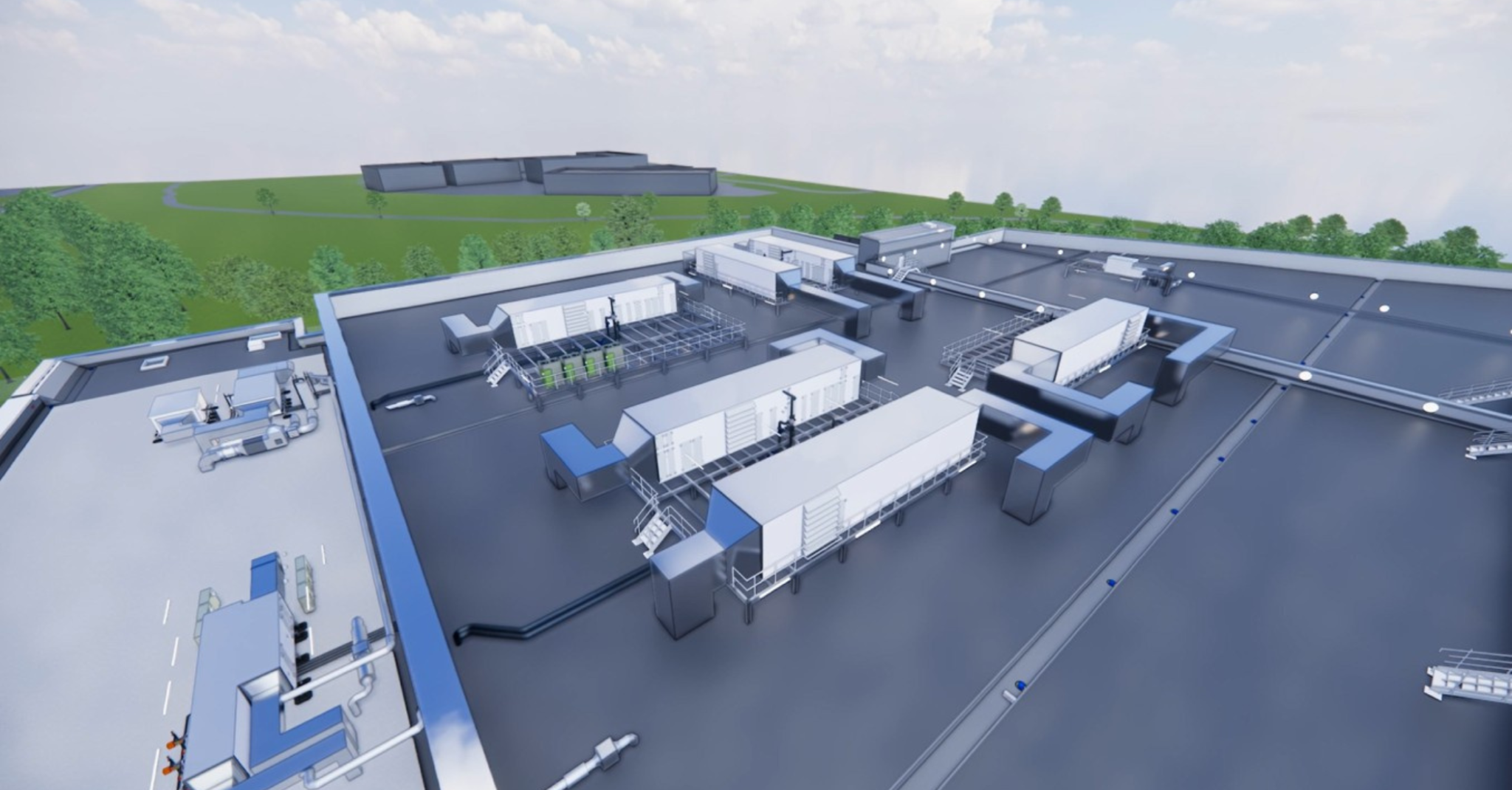
Richard describes the air handling units on the roof: "Some of these air handling units are enormous. We're talking about equipment twelve metres long. Getting those pieces of plant established early and understanding where they're going is critical because everything else builds around them."
Beneath the roof plant sat a four-metre high plenum, a full-height coordination zone above the clean rooms. A forest of ductwork, fan filter units, and services all working together to deliver air to exact specifications.
.gif)
"This huge room - we coordinated in it and above it. All the air came down and fed through these filter units to deliver air to a very hygienic standard for their processes." - Richard Denver
Designing these complex systems also means considering maintaining them and that’s where geometrical questions align with practical ones, and experience really needs to inform the decision-making. Years of modelling work comes down to balancing the realities of these environments with practical engineering constraints:
- Can maintenance teams access filters?
- Can cable routes be modified later?
- Can plant be replaced without dismantling surrounding systems?
- Can equipment be serviced safely throughout the building lifecycle?
"Just because it fits doesn't mean it's buildable. The model might look fine because there are no clashes, but that doesn't mean it's maintainable." - Richard Denver
.gif)
"It's not just the design itself. It's the practical side of it. Can somebody actually get back to maintain it later? If a light fails, can someone physically get there and replace it?" - Richard Denver
As Richard Denver, Associate Director and BIM Engineering Manager, says: "We're finding the problems before they ever hit site. Two years before boots are on site is a better time to solve a problem than two minutes before an installation." Resolving these issues in a 3D BIM model creates cleaner installation sequences, reduces variation risk and protects cost certainty before construction starts.
.gif)
The 'I' in BIM
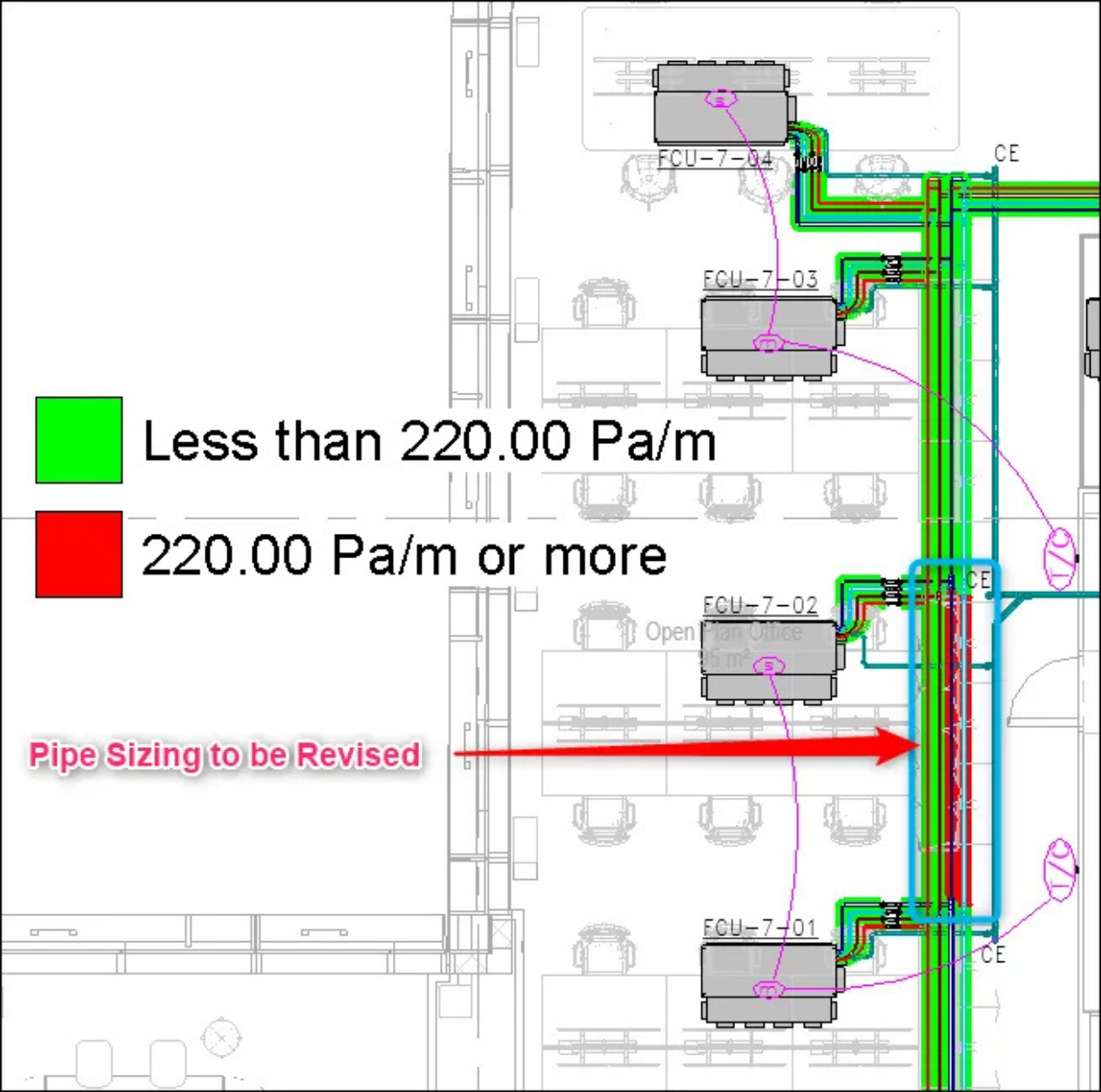
Design certainty is at the forefront of these projects. Richard explains how the team builds custom Revit families with real performance data embedded: "We build our own Revit families with the relevant design information embedded; cooling outputs, performance criteria and operational parameters. We programme that directly into the model and use it to carry out our own QA checks."
That means every fan coil, every air handling unit, every section of ductwork carries its design parameters. Pipe sizing, cooling loads, ventilation rates - all validated against project requirements before anything reaches site.
"Those checks are far easier and far more reliable in a BIM environment than in traditional 2D workflows." - Richard Denver
The model highlights where revisions are required immediately rather than discovering problems during installation (undersized pipes in red and correct sizing shown in green):
Design certainty protects cost certainty
For developers and project teams operating in regulated environments, late-stage changes carry compounding risk. Richard talks about this commercial reality: "If you don't get it right at this stage, it creates major downstream problems when installations begin and teams are forced into reactive decisions."
Early modelling removes that exposure:
- Plant room sizing is confirmed at planning stage.
- Air handling unit locations are locked in before facade decisions are final.
- Plenum coordination above clean rooms is resolved whilst there's still flexibility in the programme - preventing planning resubmissions, tender revisions, and validation delays.
"The selling point in BIM was always design certainty, but also cost certainty. It's not just creating 3D models for the sake of it, you're using it to deliver better designs." - Richard Denver
Real-time collaboration
One advantage of embedding engineering expertise directly into the BIM workflow is speed of decision-making. Richard explains: "We have BIM engineers working directly with architects and making real-time decisions, rather than an engineer stepping away and coming back later."
On coordination calls, changes will happen live with everyone present in real time. Move a duct route. Test a structural beam opening. Adjust plant access. The model updates, the team confirms buildability, and the decision is locked in.
"On coordination calls we're saying, 'move that here, try that there'. Within reason obviously. But we're able to provide design answers there and then rather than taking it away for further discussion."- Richard Denver
That responsiveness keeps programmes moving without creating downstream uncertainty.
Planning stage involvement
"There's nothing worse than returning to planning because an air handling unit wasn't sized correctly. If you're relying on assumptions or flat 2D layouts, you simply don't have the same visibility." - Richard Denver
Visuals submitted as part of planning become commitments. So, if the air handling unit is the wrong size, or the plant screen doesn't match the facade, or equipment is too visible from the street - the project either reapplies or builds something that doesn't align with the approved scheme.
"Once you're tied into planning visuals, going back becomes expensive and creates risk. Getting involved as early as possible reduces that exposure." - Richard Denver
"You can hand over asset information directly from the model.”
At project completion, Richard exports asset registers directly from the BIM model, such as equipment lists with installation dates, maintenance schedules, running parameters, and life expectancy.
That data feeds into facilities management systems. Some clients integrate QR codes: scan a piece of equipment on site and the full specification, maintenance history, and documentation appears.
"If the information is embedded in the model, you can extract it at handover and provide clients with exactly what they need." - Richard Denver
ESG performance starts with efficient systems
Pharmaceutical facilities consume significant energy. Clean rooms run continuously, air handling units move large volumes of air, and precision equipment operates around the clock.
"From a commercial perspective, if you improve efficiency, it directly improves operating cost. If systems run efficiently, whether that’s high-performance AHUs, optimised chillers, or equipment operating at the right set points, you reduce energy consumption and improve overall building performance. Ultimately, that flows straight through to cost and carbon." - Richard Denver
Richard and the BIM engineers work alongside the sustainability team to establish performance criteria early, such as fan speeds, AHU performance, and chiller specifications. Sometimes that means bigger equipment to achieve lower running speeds and better efficiency. But the result is a design that supports both operational efficiency and commercial performance.
The model also supports embodied carbon assessments because quantities, material volumes and equipment information can be extracted accurately.
Two years beforehand, not two minutes
.gif)
"By embedding design information into the model, we're able to carry out proper checks and create genuine design certainty." - Richard Denver
That certainty - design, cost, programme, operational - is what allows complex regulated environments to validate on schedule, perform as intended, and support long-term operational resilience.
Richard is a BIM engineer and manager who works across developers, design teams and stakeholders to establish greater confidence in delivery and stronger operational resilience once complex regulated environment projects go live. Get in touch with him at: rdenver@metec.ie
About the author: Richard Denver has built up 10 years’ experience in the engineering industry. Eight of those years have been spent specialising in building information modelling (BIM), seeing projects through from design to completion that have spanned large office environments, hotels, residential and third level education.
These include Earlsfort Terrace, Cumberland House, One South County, Chancery Hotel, Guidewire Fitout, Indeed Fitout Capital Dock, Tech Group, and BD Medical.
.png)